

The Color Scheme and Blocking Process
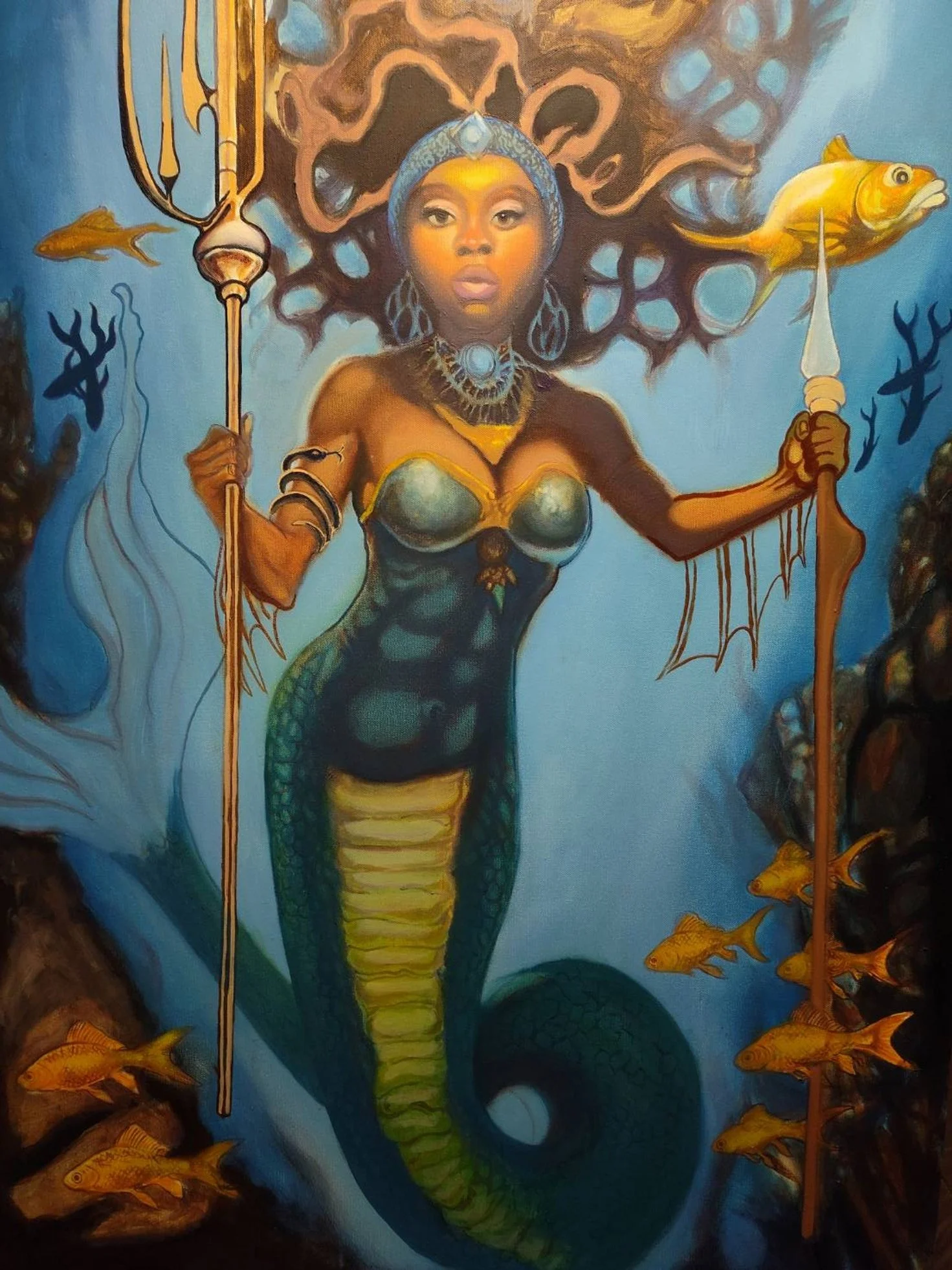
This oil painting portrays a black woman as a mermaid, blending tradition with fantasy. Vibrant colors highlight her skin and shimmering tail. Her serene expression and flowing hair merge with the underwater scene, evoking mystery and grace. Detailed brushwork captures water's fluidity and her soft features, celebrating cultural beauty and mythical elegance.
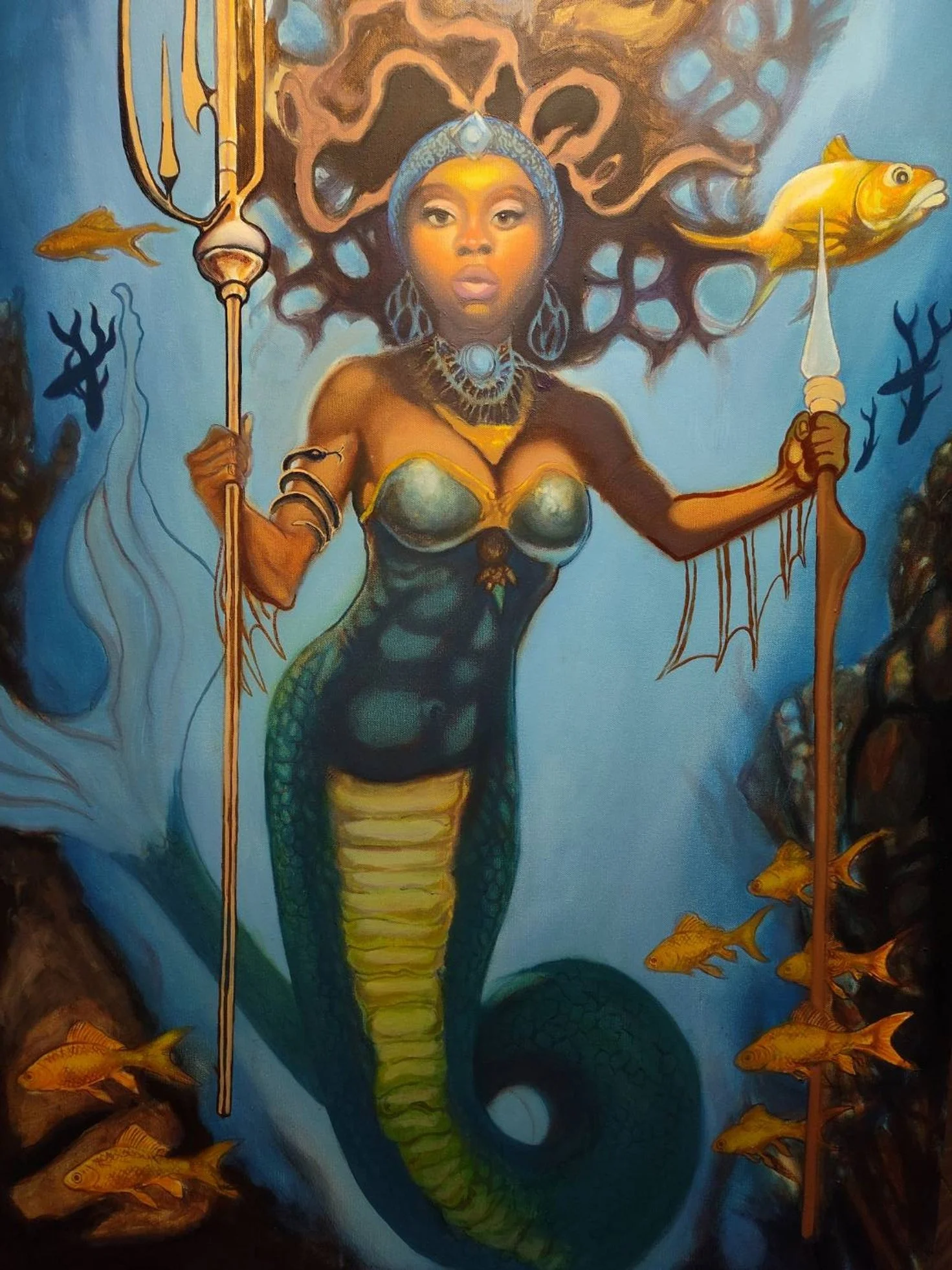
After completing the underpainting, the next crucial step in oil painting is to carefully decide on a color scheme that will ultimately define the overall mood, atmosphere, and harmony of the piece. Once this thoughtfully chosen palette is firmly established, the artist begins the important process of blocking in the main colors by applying a thin wash of oil paint. This stage involves carefully applying diluted pigments to create and establish the basic color relationships and tonal values, all without adding heavy detail, which allows the underpainting to subtly show through and effectively guide the overall composition. It serves as a vital foundation to build upon, helping to clearly map out areas of light, shadow, and form before progressing to more opaque, layered, and refined paint applications. This methodical approach ensures a cohesive, balanced, and well-considered progression in the painting’s gradual development.
The Black Mermaid “Under Painting Processes”
Black Mermaid
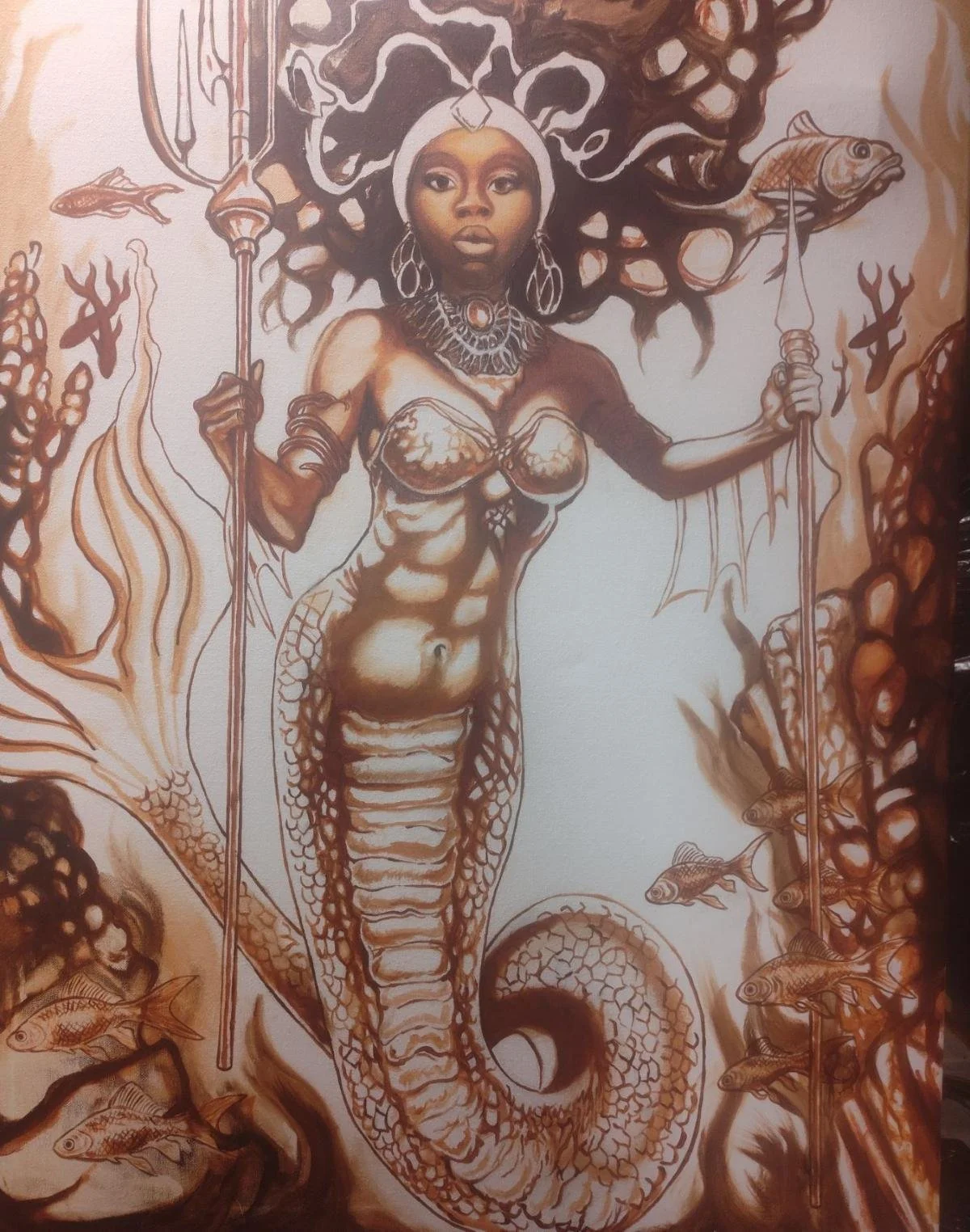
Beginning an oil under-painting with burnt sienna and burnt umber involves establishing the fundamental values and composition of your artwork. Start by preparing your canvas with a thin layer of burnt sienna, diluted with a medium such as linseed oil or a solvent to create a warm, translucent base. This initial wash helps unify the surface tone and adds warmth to the subsequent layers.
Next, use burnt umber to sketch the major shapes and shadow areas, focusing on the tonal values rather than details. These two earth tones create a natural, muted palette that is ideal for mapping out the light and dark contrasts of the composition. Burnt umber’s cooler, darker quality complements the warmer burnt sienna, allowing you to build depth and dimension effectively.
Work quickly while the paint is still wet to blend the two colors softly in areas where shadows transition to light. This process, often called a “grisaille” or monochrome under-painting, sets a solid foundation for applying color layers later. Keeping the brushstrokes loose and gestural at this stage ensures flexibility in refining forms during the painting’s progression.